Beginner Excel Course Benefits for Students and Professionals
Discover how a Beginner Excel Course helps students and professionals improve workplace skills, confidence, and career opportunities with NIST.
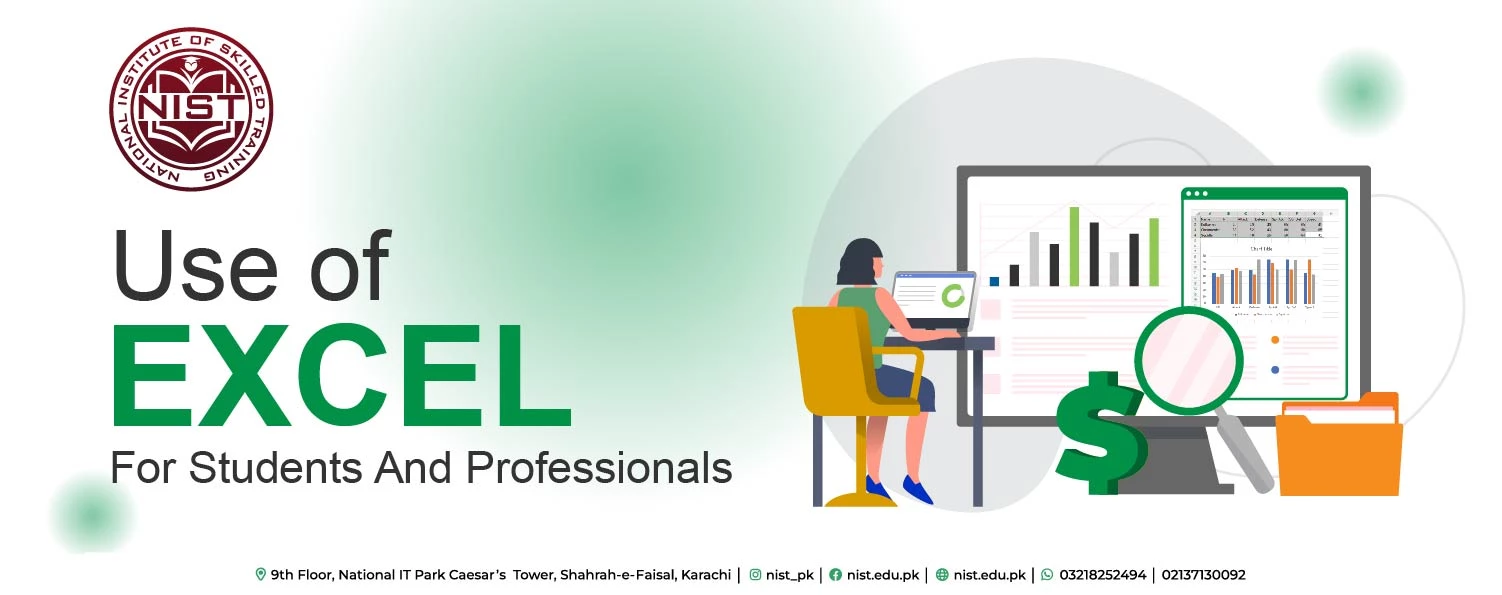
Some skills only matter in a certain job, but Excel is different. Whether you are a student creating assignments or someone planning a new career, Excel shows up in everyday situations. It saves time and reduces mistakes when organizing information, building budgets, and performing quick calculations.
That is why joining a beginner Excel course is one of the smartest moves you can make. You do not need any experience. Start with the basics and build from there until everyday Excel tasks feel easy. Best of all, these skills stay useful no matter where your career goes.
You build confidence from day one
Many people avoid Excel because it looks hard at first glance. In truth, most people just need someone to walk them through the basics in plain terms. A good beginner Excel training program is about practical lessons, not confusing tech talk.
You learn how to enter data, format worksheets, build tables, write basic formulas, and keep information organized. By the end, Excel starts to make sense, and you stop guessing which button does what. That clarity is useful: class projects move faster, office tasks stop stalling on spreadsheet logistics, and personal budgets or trackers actually get finished.
Students get ready before entering the workplace
Many students graduate without professional Excel skills. Then, during internships or their first job, they find out how often companies expect employees to use spreadsheets.
Learning Excel early gives you a real edge. You can build reports, organize research, track expenses, back up presentations with actual data, and turn in assignments that look more polished. Employers also value future employees with existing practical computer skills.
A beginner Excel course teaches the skills employers actually expect you to have. Rather than scrambling to learn under pressure after you get hired, you already know the basics before your career starts.
Professionals save time every week
If you already work in an office, you probably have to deal with numbers, lists, schedules, customer records, or reports. Doing all that manually takes longer, and it leaves more room for error.
Introductory Excel training teaches you the simple tricks that make daily work smoother. Sorting, filtering, formatting, and basic formulas turn hour-long tasks into five-minute ones. Saving even fifteen or twenty minutes a day might not sound like much, but add it up over weeks and months, and that time can be used for things that actually matter.
Helpful across different careers
One reason Excel stays so popular is that nearly every industry uses it. Finance teams track budgets. Sales teams manage customer data. HR keeps employee records. Teachers organize grades. Admin staff prepares reports. Even small business owners use Excel to track expenses, inventory, and income.
This makes Excel an important skill for office staff, no matter what your job title. Once the basics click, adapting Excel to whatever task comes next gets a lot easier.
Learning the basics builds stronger skills later
Some people try to skip straight to advanced Excel functions. They usually struggle because they never built a solid foundation. Step-by-step learning just works better.
A beginner Excel course takes you through workbook navigation, formulas, cell references, formatting, charts, and data organization before moving on to advanced topics. Once you get the basics, it’s much less scary to learn PivotTables, advanced formulas, dashboards, or automation.
Companies also benefit from strong excel foundations
Training is not useful only for individuals. It’s also good for businesses when their employees understand Excel properly. Teams become more productive, reports become more consistent, and less error makes its way into daily work.
This is why many companies invest in corporate Excel fundamentals training for their new hires and current employees. This way, everyone doesn’t do things their own way, and employees work more efficiently following best practices. Better Excel skills also improve communication between departments because information stays clear and consistent.
A practical skill that keeps growing with you
Unlike most short-lived trends, Excel keeps showing up as one of the most requested workplace skills. Even as new software and AI tools become more common, companies still lean on spreadsheets for planning, reporting, budgeting, and managing data, and that is not changing anytime soon.
Learning Excel now pays off later. You walk into interviews with more confidence, get more done at work, and feel ready when new responsibilities land on your desk. It is a skill that follows you through school and stays with you for your whole career.
If you want structured, hands-on learning, the National Institute of Skilled Training (NIST) offers industry-focused programs designed for real workplace needs. Our experienced instructors help you understand concepts through practice rather than memorization. Whether you are starting from scratch, sharpening your office skills, or getting ready for what comes next, NIST provides beginner Excel training that builds your confidence step by step and prepares you for real success.