Content Creation Course for Beginners: Everything You Need to Know Before You Enroll
Learn writing, SEO, social media, and content skills with NIST’s content creation course for beginners in Karachi.
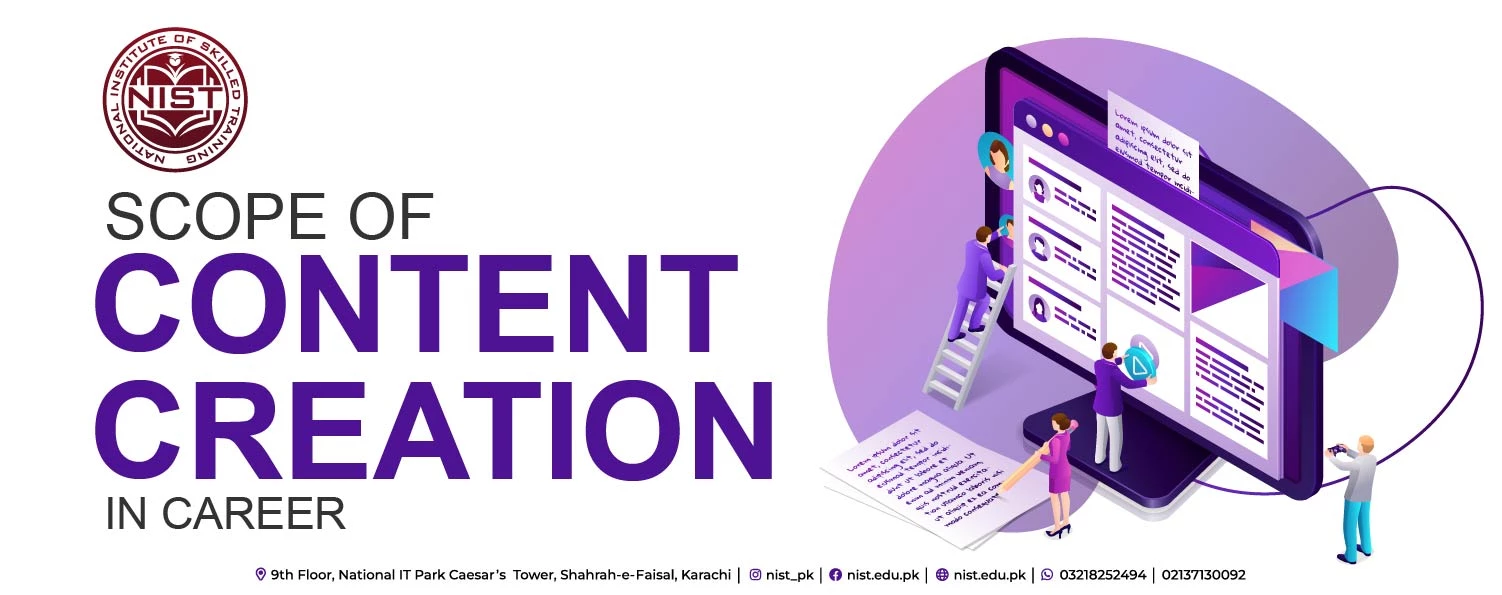
Content is now an integral part of almost every online business. Websites need useful articles. Brands need social posts. Businesses need clear info for their clients. That’s led to an increasing demand for people who can write simple, useful, and engaging content.
A content creation course can teach newbies how the plan, write, edit, and prepare content for different platforms. It can be useful for students, fresh graduates, freelancers, and people who want to build a career in digital marketing or online writing.
What Is a Content Creation Course and Who Is It For?
Content creation courses teach the basic skills needed to create written content for websites, blogs, social media, marketing campaigns, and other digital platforms. It’s not just about creating lengthy articles. Good content also requires research, creativity, audience awareness, editing, and a clear objective. A beginner can learn to select a topic, know an audience, organize ideas, and turn those ideas into useful content.
NIST provides an English content writing course that teaches you how to create content for websites, marketing, social media, search engines and scripts. The course also includes practical exercises, assignments, and a final project.
Content Creation for Beginners: Where Do You Actually Start?
Starting content creation beginners feels hard when you don’t know what to learn first. Many beginners begin writing without knowing their audience, their purpose, or their writing format. This can make the content ambiguous or not useful.
The next step is to learn about different types of content. A blog post is a different beast from a social media caption or a website service page. Knowing those differences helps a writer produce better content for each platform. Another important skill is to do research. A content creator is often required to gather information from reliable sources and understand the topic before writing.
What You'll Learn: Inside NIST's Content Writing Curriculum
Course Objectives include writing original website copy, developing marketing content, writing for social media and search engines, and creating scripts. Students also do theory and practical work throughout the course.
Writing for Websites, Blogs and Social Media
Sample website content includes: home pages, service pages, about pages, and other business information. Blog writing is usually more expansive, meant to answer questions or shed light on a topic. Writing for social media is often shorter. It needs to catch the eye instantly, but still deliver a clear message.
SEO Writing and Search-Optimized Content
SEO writing is all about writing content that is useful for the readers and also makes it easier for search engines to understand the topic. You can learn about beginner keywords, search intent, headings, readable paragraphs, and natural keyword placement.
Good SEO content answers the reader’s question and provides useful information. This skill can be especially useful for people interested in content writing courses in Karachi, as SEO content is used by websites, agencies, online stores and digital businesses around the world.
Storytelling, Scriptwriting and Audience Research
Another skill that is useful for digital content is scriptwriting. Scripts can be created for videos, ads, educational materials, and social media clips. It’s important to research your audience too. A writer should know who will read or see the content. The language might be different for students than it is for business owners or technical professionals.
Editing, Proofreading and Content Strategy Basics
Creating content is not just writing the first draft. Editing is the process of cutting out superfluous words, improving the flow of sentences, and clarifying the message. Proofreading is about grammar, spelling, punctuation, and other small mistakes. Content strategy is another layer in the process. It’s about asking yourself what you want to publish, who it’s for, what you want it to do, and where it’s best shared.
Content Creation Classes vs. Self-Learning: Which Is Better?
Content creation classes offer a more structured way to learn. Students can follow a planned course, ask questions, do assignments, and get feedback. Beginners can also get more comfortable with writing by practicing regularly.
Course Duration, Eligibility and Fee Structure
These details allow students to figure out if a program suits their schedule. The minimum eligibility requirement, as shown in NIST’s current course information, is O-Levels or an equivalent qualification. The course is a 2-month course with classes once a week on Saturday for 3 hours.
Eligibility Criteria (O-Levels or Equivalent)
The listed minimum requirement for the course is O-Levels or equivalent. This program suits learners who have finished this level of education and want to improve their practical writing skills.
Class Schedule and Total Duration
It is a two-month course with three hours of class on Saturday, so they say. The NIST course runs for eight weeks and consists of theory and practical work, amounting to 48 credit hours.
A weekly schedule can be helpful for students and working people because it leaves time during the week to practice and do assignments.
Registration Charges and Total Course Fee
The present page of NIST courses indicates the charge of registration as Rs. 1,500/ and course fee as Rs. 18,000/-. Students should check the latest fee and schedule with NIST before registering, as details can change.
Best Content Writing Courses in Karachi: What Sets NIST Apart?
While comparing content writing courses in Karachi, students should not just look at the title of the course. It is good to check the topics covered, practical work, method of assessment, schedule, eligibility, and certification. NIST’s course is a mix of theory and hands-on. Students have to submit assignments to the trainers on a regular basis, and a final project is used to assess the overall understanding of the students. NIST issues a certificate of completion to successful students.
The program covers a lot of different areas and doesn't just focus on traditional article writing. The stated goals include website content, marketing content, social media, search engine content, and scripts. This broader approach can help beginners to develop an understanding of how writing is used across different digital channels.
Career Paths After Completing a Content Creation Course
Learning how to create content can open the door to different jobs. The exact path of one’s career depends on one’s skills, portfolio, experience, and interests. A course can give the foundation, but it is important to practice regularly after finishing the program. Building sample work can provide new writers with something to show potential clients or employers what they can do.
Freelance Content Writer
A freelance writer produces content for various clients. Projects could be blogs, website pages, product descriptions, social media posts, marketing copy, etc. Freelancers might find work with local businesses, agencies, online companies, or international clients. A good portfolio can give a good presentation of your writing skills to beginners looking for projects.
In-House Content Marketer
Businesses often need people who can produce and manage written content. An in-house content marketer could be working on blogs, website content, campaigns, newsletters, or other marketing materials. You’ll also be liaising with designers, SEO professionals, social media teams and marketing managers as part of this role.
Social Media and SEO Content Specialist
SEO and social media today go hand in hand with content creation. A specialist will create social media posts, website content, blog articles, captions, or other material that is search-focused. This combo can be useful for people who enjoy writing and digital marketing. Learning the fundamentals of SEO can also help a writer to understand why some content does better in search results than others.
Final Thoughts: Is a Content Creation Course Worth It in 2026?
Creating content is not simply about putting words on a page. It’s about knowing your audience, doing research, producing valuable content, choosing the right format and refining content through editing. A content creation course can offer a starting point for people who want to explore writing, SEO, social media, marketing, blogging, or freelancing.
If you’re looking for content creation classes or content creation courses in Karachi, take a look at the NIST course structure and consider how it aligns with your career goals.